

One side of their head is flatter
It shows best looking down from above, at around two or three months. This is plagiocephaly.
Unhurried, and without words you don't understand. In the first session we look, we measure, and we explain what we see.
Many families arrive with something they have noticed at home, or with a phrase from the paediatrician they never quite understood.
It shows best looking down from above, at around two or three months. This is plagiocephaly.
Turning their head the other way is hard. Sometimes there is congenital muscular torticollis.
Rolling, sitting, crawling, first steps: every motor milestone has its own range. If one is late, it is worth looking at.
They slip through your hands, or their arms and legs are hard to settle. This is hypotonia or hypertonia.
They cough, feed less well and sleep in snatches. Respiratory physiotherapy mobilises those secretions.
With prematurity, development is measured from the corrected age. Early stimulation supports those months.
If you recognised yourself in any of these, it makes sense to look at it calmly.
Both begin the same way: looking at your little one, understanding what is happening, and explaining it in words that make sense. Then we decide what to do.
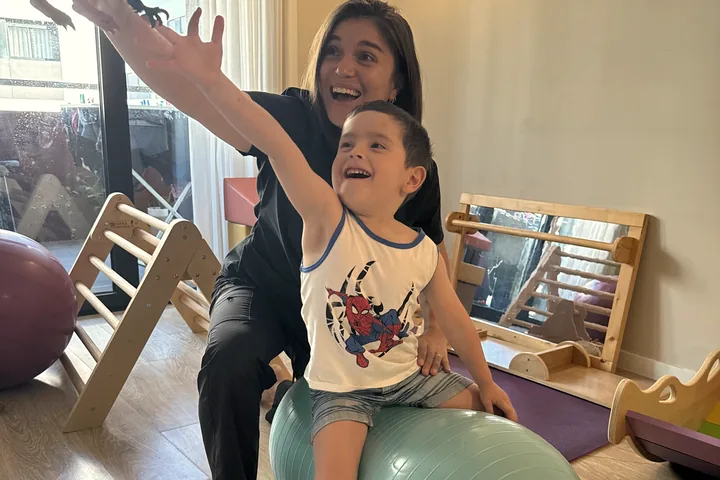
I assess how your little one moves and how they hold themselves. I work with my hands, through play, and with what you do at home between sessions.
For babies, children and adolescents. Also if you simply want to know how things are going.
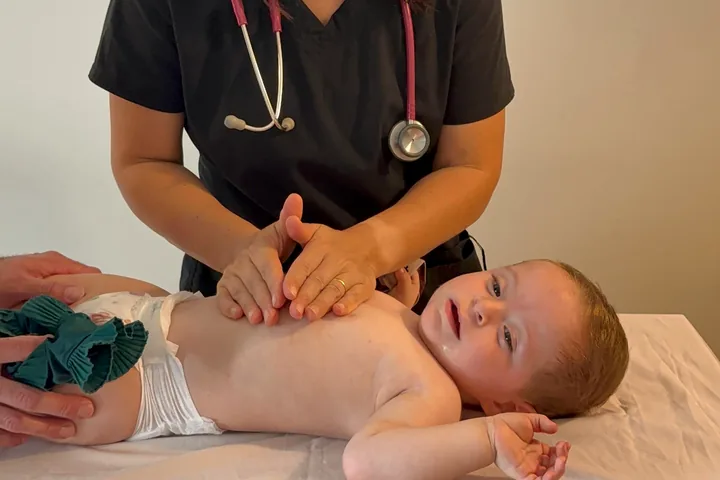
When the chest is congested, breathing is tiring and sleep is hard. I mobilise secretions with gentle manual techniques. I suction only if it is needed.
For babies and children with respiratory conditions, with or without a paediatrician's referral.
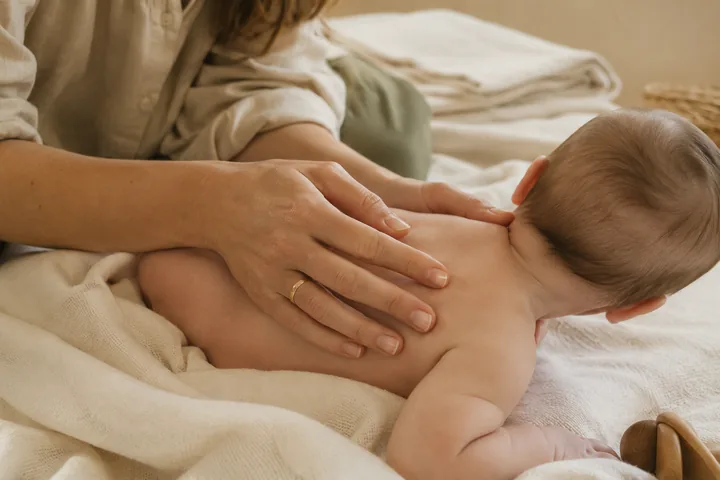
You learn gentle movements for everyday use: legs, feet, tummy, chest, arms and back, and what to do during bouts of wind. Also how to recognise when your baby is receptive and when they would rather stop. No previous experience needed.
See upcoming dates
Leaving the house with a small baby is not always simple. Some sessions can be done at your home, after a short assessment, because not everything works the same way there and I would rather tell you beforehand.
Ask if I cover your areaChoose their age. You will see what is usual around those months, and what deserves a calm look. No scores, no levels, no traffic lights.
Swipe to see other ages
0–2 months
This is guidance, not a diagnosis. The ranges are very wide and every child moves at their own pace: two babies developing perfectly well can start crawling months apart.
Talk it through with me on WhatsAppNothing invasive happens in the first session. We look, we measure, and we explain. It lasts around 60 minutes.
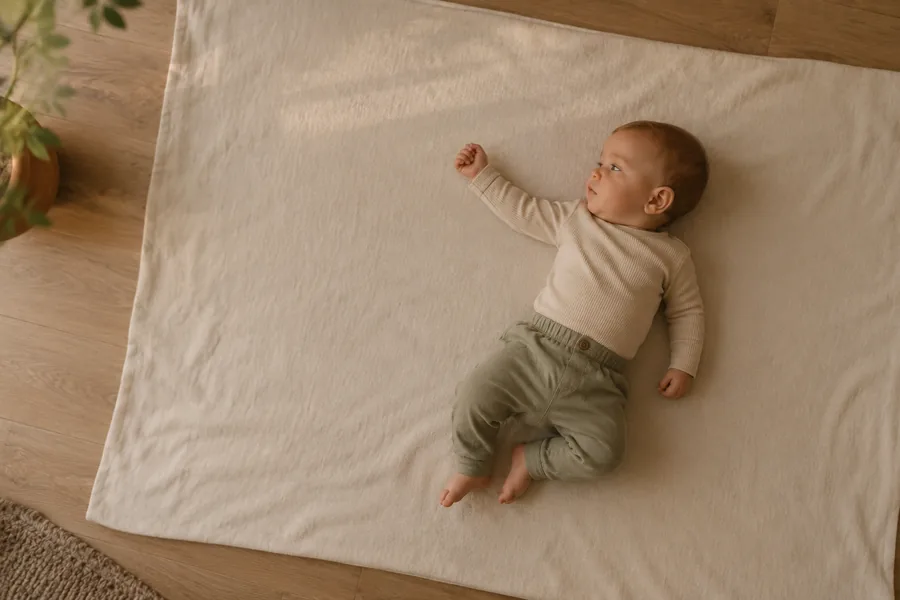
The position of the head. Which way it turns on its own, and how far it goes without forcing.
The line of the shoulders. Whether the body rests evenly on both sides or always loads one.
What they do with their hands. Whether they meet in the middle, whether both are used equally, whether they go to the mouth.
What the paediatrician said, what you have noticed at home, what really worries you. Unhurried, and without being interrupted.
I observe them on the floor, on their back, on their tummy and in arms. I measure whatever needs measuring and, if you have come about breathing, I listen to their chest.
Gentle hands, on your lap or on the couch, whichever they prefer. If they cry, we stop and try another way.
In plain words, including the things that do not worry me. If no treatment is needed, I tell you that too. You leave with two or three specific things to do at home, and I write them down for you.
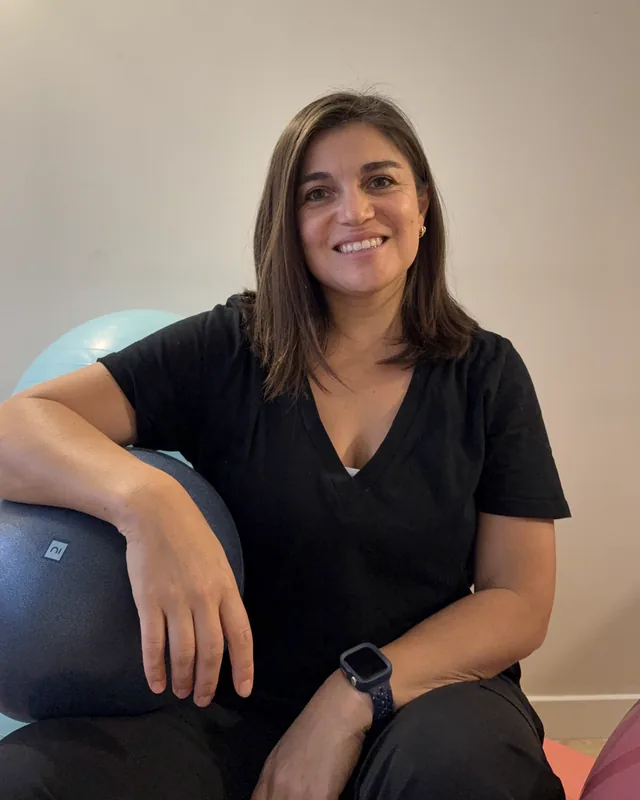
I have been a physiotherapist since 2010 and I am mother to Esteban and Bastián. For more than a decade I worked in primary care, where respiratory physiotherapy filled almost my whole day. I also supported families in early stimulation workshops, and pregnant women preparing for breastfeeding.
I was diagnosed with coeliac disease at almost the same time my son was found to have a cow's milk protein allergy. It was a period of great uncertainty. What gave me back my calm was not one more test: it was professionals who sat down and explained it to me.
Sometimes being on the other side of the table is what teaches you most.
That is why I work the way I do. With respect for the family and particular attention to the mother-child pair. Nobody here is going to judge how you are doing it.
Write to me with your little one's age and what you have noticed. I answer personally. And if your case is not for me, I will tell you that too, and point you to the right person.